Not all U.S. addresses serve the same purpose. As a remote worker, expat, or business owner abroad, you may be wondering: do you just need a way to receive and manage mail, or do you also need a residential or commercial address with supporting documents?
You’re not alone. VirtualPostMail (VPM) has helped 33,000+ customers across 197+ countries solve this exact problem by providing the right kind of remote U.S. address for their needs.
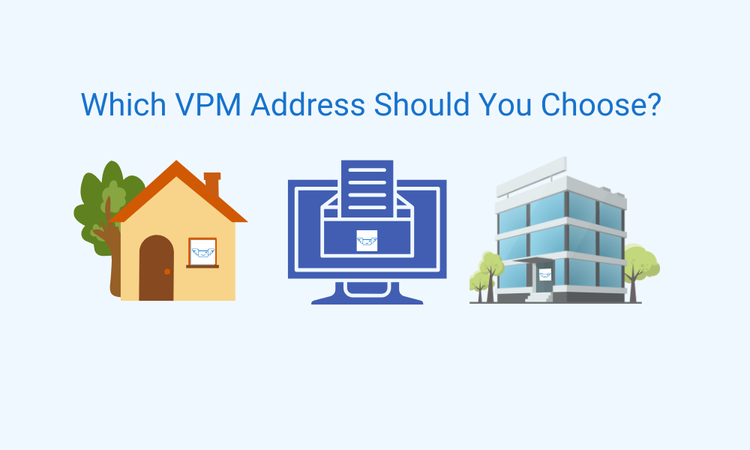
This guide breaks down VirtualPostMail’s three core address service options — virtual mailbox, TruResidence, and TruLease, to help you choose the right fit for banking, business verification, or day-to-day mail handling.
Two separate address problems remote workers and individuals face
When you’re working or living abroad, “having a U.S. address” can mean two very different things. Many people confuse these needs and end up choosing the wrong address service solution.
Operational mail handling
You need a reliable U.S. location to receive mail, scan important letters, forward packages, and deposit checks. This is solved by a virtual mailbox service, which gives you a commercial mailing address and digital access to your mail.
Learn more about how a virtual mailbox works on VPM’s virtual mailbox addresses page.
Residential or commercial address documentation
Sometimes banks, marketplaces, or government agencies ask for documents tied to what is defined as a physical address, and require proof of address such as a lease agreement or utility bill with the physical address.
A virtual mailbox alone does not include those documents. For that, you need TruResidence (residential address) or TruLease (commercial address).
Choosing the wrong address product can cause delays, rejected applications, or extra costs. Worst it might not work for your needs. The key is to match the type of address to the documentation your bank, marketplace, or agency requires.
Quick comparison: virtual mailbox vs. TruResidence vs. TruLease
Here’s a side-by-side look at what each remote address service option provides:
| Need / Use case | Virtual Mailbox | TruResidence | TruLease |
|---|---|---|---|
| Mail receiving | ✅ | ✅ | ✅ |
| Package receiving | ✅ | ✅ | ✅ |
| Check deposit service | ✅ | ❌ | ❌ |
| Lease agreement | ❌ | ⚪ (add-on) | ✅ (1 year) |
| Utility bill service | ❌ | ⚪ (add-on) | ⚪ (add-on) |
| Residential address | ❌ | ✅ | ❌ |
| Physical commercial address | ❌ | ❌ | ✅ |
⚪ = Available in certain plans or as an add-on.
When to choose a virtual mailbox
A virtual mailbox is the right choice if your main challenge is managing mail while abroad or converting physical mail into digital. It provides a stable U.S. mailing address in a commercial office building, with all processing handled directly by VPM’s owned and operated facilities. This setup ensures strong security standards, protects your privacy, and keeps your personal and business mail organized in one place.
What you get with a virtual mailbox:
- Mail scanning and online access — log in and read your mail from anywhere, usually within an average of 6 business hours.
- Package forwarding — your packages stay secure in monitored facilities with 24/7 surveillance, and you can consolidate shipments to save on costs. Customize delivery with insurance, tracking, and express options, with most orders shipped within 1 business day on average.
- Check deposit service — no commitments, no monthly fees—pay only per deposit and save more when you bundle checks (over $2.9 billion deposited since 2009).
- Free registered agent service — available with all mailbox addresses in CA, DE, FL, NV, and TX.
- On-site processing and secure storage — your mail is handled at VPM facilities (not outsourced) with SOC 2 Type II and HIPAA compliance.
Important limitation: virtual mailbox plans do not include a lease agreement or utility bill. If your organization requires supporting documentation for proof of address, you’ll need TruResidence or TruLease.
Example scenario: You run a remote startup and need a reliable way to receive business bank statements, client payments, invoices, and important legal documents. A virtual mailbox keeps your online and physical mail organized and secure for accessing it online.
When to choose TruResidence
A TruResidence address is the right fit if you need a remote U.S. residential address that can also provide optional add-on documentation, such as a lease agreement or utility bill. Unlike a TruLease, this product is oriented toward individuals, not businesses because it is for maintaining personal accounts and receiving mail.
What you get with TruResidence:
- U.S. residential address — receive personal mail at a stable home address instead of using friends or family.
- Lease agreement add-on — available if an institution requires a copy of a lease.
- Utility bill service add-on — optional documentation if banks or agencies request it.
- Mail receiving — securely receive incoming mail at the home address.
Important distinction: TruResidence provides a residential address, not a commercial one. If you’re setting up a business entity, applying for marketplace accounts, or registering with government agencies, TruLease is a better match.
Example scenario: You’re an American expat living abroad who wants to keep your personal U.S. bank account active as you travel. When the bank requests a residential address tied to a lease or utility bill, TruResidence gives you the option to provide that documentation and maintain your financial connections back home. Don’t stress about the security and accessibility based on the use of friends or family.
When to choose TruLease
A TruLease address provides a verified U.S. commercial address with the documentation banks, marketplaces, and government agencies require—perfect for businesses without a traditional office or operating from abroad.
What you get with TruLease:
- U.S. commercial address — part of VPM’s partner network of commercial office building owners that will offer you to rent a space.
- Lease agreement — official documentation showing your business occupies a physical commercial address for 1 year.
- Utility bill in the business or lessor’s name — supporting documentation often requested by banks, payment processors, or government entities as an add-on.
- Mail and package handling — the same scanning, forwarding, and check deposit options available through virtual mailbox bundle.
Important distinction: TruLease is not intended for personal banking or residential needs. If you only need a residential address for banks, choose TruResidence instead.
Example scenario: You’re running a U.S. business and your financial provider asks for a commercial lease agreement with a utility bill. With TruLease, you can provide the necessary documentation.
Quick rules to decide
If you’re unsure which remote address service fits, here are some practical shortcuts:
- If you need to digitize your physical mail, mail scanning, forwarding, or check deposit - choose a virtual mailbox.
- If your personal bank or credit card company asks for a residential address - choose TruResidence.
- If you’re a marketplace (Amazon, Shopify) or payment processor asks for a commercial lease - choose TruLease.
- If an organization explicitly requires a lease agreement or utility bill - do not rely on a virtual mailbox. Use TruResidence (personal) or TruLease (business).
| Product | Primary Use Case | Best For |
|---|---|---|
| TruLease | Business | Companies, startups, and e-commerce sellers who need a commercial address with supporting documents (lease agreement included, utility bill add-on). |
| Virtual Mailbox | Personal and Business Online Mail Management | Anyone who wants a secure way to digitize and organize physical mail, forward packages, and deposit checks. |
| TruResidence | Personal Use | Expats and U.S. citizens abroad who need a residential address to maintain bank accounts, credit cards, or other personal financial relationships that require additional documentation. |
These quick heuristics will help save you from choosing the wrong address service, but definitely don't hesitate to reach out for your unique use case.
Final review on VPM address services
Your needs may shift depending on whether you’re a remote worker, expat, or business owner. The most important step is to match the product to the type of documentation required so you avoid delays or rejected applications.
To dive deeper into each option, explore these resources:
Still unsure? Explore your specific requirements with the full comparison.