When you hand off your mail to a provider, you’re trusting them with some of your most sensitive documents—things like bank statements, incorporation papers, financial reports, and even private healthcare information. In 2024 alone, more than 1.1 million identity theft complaints were reported in the United States, a stat that highlights just how valuable personal documents and financial information can be to criminals.
Despite these risks, many virtual mailbox providers still rely on outdated systems and weak security practices that feel like they’re stuck in the 1980s (and not in a charming, retro way).
However, you don’t have to settle for risky, slow, or unpredictable service. This guide breaks down five of the biggest problems people face with virtual mailbox providers and how VPM solves each one, helping you choose a solution that keeps your data safe, your mail prompt, and your peace of mind intact.
Problem #1: Risk of weak security of your mail data (physically and online)
Most virtual mailbox providers offer some baseline security. However, the reality is that many of them stop there.
Some outsource their entire mail handling operations to third-party companies to save money, despite evidence showcasing this isn’t ideal. A 2025 Data Breach Investigations Report by Verizon found that 30% of data breaches are linked to third-party involvement, a number that doubled from the previous year.
Others allow your confidential mail and packages to sit in unlocked lobbies, accessible to anyone and everyone who happens to use the space. What this means is more opportunities for your mail to get lost, mishandled, or end up on an unwanted adventure (and not the fun kind).
Data encryption is also vital to ensuring mail and data security. In fact, it might just be the single most important security feature to look for in researching a virtual mailbox provider. If you’re not careful, you could end up with a service provider whose archaic dated encryption leaves your most confidential information vulnerable.
There are even providers out there who don’t offer multi-factor authentication (MFA). In the year of 2026. That’s essentially like leaving your front door wide open and allowing anyone who walks past to enter it. Would you be okay with that? Probably not!
Other red flags to look for are a lack of SOC 2 and HIPAA compliant infrastructure, as well as failure to provide on-site mail shredding services. Even something as innocuous as offering in-location mail pickup can introduce security risks.
A good virtual mailbox is designed to handle your documents with care. You need a high level of security, especially if you intend to send or receive things like financial statements, legal documents, or protected health information. If your provider can’t ensure adequate protection of your documents, that’s a deal-breaker.
VPM’s security-first approach to mail management
VPM was built from the ground up with security at its core. Unlike providers that rely on outsourced labor, VPM owns and operates its own secure facilities, ensuring every piece of mail is handled by trained, vetted staff under strict access controls.
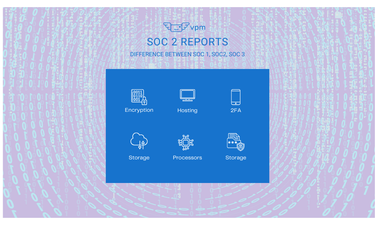
The platform itself runs on SOC 2 Type II compliant infrastructure, meaning its systems, procedures, and security controls are independently audited and monitored to meet some of the highest standards in the industry. All customer information is protected with bank-level encryption in transit and at rest, and mandatory MFA keeps out anyone who shouldn’t be there, even if they happen to guess your favorite password (which, by the way, this is your reminder to change).
For businesses that deal with protected health information, VPM offers HIPAA-ready virtual mailboxes as well as Business Associate Agreements, making it one of the few providers equipped to support regulated industries.
Every action in the platform is tracked with detailed audit trails, giving you visibility into who accessed what and when. Combined with 24/7 monitored locations, privacy-controlled handling, and a fully in-house mail processing operation, VPM ensures that your documents stay locked down, traceable, and protected from the moment they arrive to the moment you decide what to do with them.
Problem #2: Mail delays that slow down your business
Slow mail scanning can be a major inconvenience for your day-to-day operations. Many providers, especially those who rely on third-party processing, often take days (or longer!) to upload mail to your account. When they finally appear, the images are often so blurry you’d think they were photographed through a smudged window. Yikes.
Part of the issue is that many virtual mailbox services don’t actually process mail themselves. Instead, they partner with third-party mail centers or local retail locations that handle scanning alongside their regular business operations. When staff are busy helping walk-in customers or processing large volumes of mail, scanning requests can easily get pushed to the bottom of the priority list.
Even experienced mail systems aren’t immune to delays. In 2024, the United States Postal Service reported delivering only about 81% of First-Class mail on time, and independent audits uncovered tens of thousands of mailpieces left delayed or unscanned at major processing facilities. While those delays occur before the mail even reaches your mailbox provider, they make fast internal processing even more important once the mail finally arrives.
For many virtual mailbox users, this is just the norm they’ve become accustomed to. However, untimely or low-quality scanning isn’t just annoying, it can hold up invoices, approvals, tax deadlines, and other tasks your business needs to keep moving.
How VPM keeps your mail fast, clear, and on schedule
VPM keeps your mail moving quickly and clearly, so you never have to wait days for access or struggle with unreadable scans.
As soon as your mail arrives, it’s logged into the system and ready for processing. When you request a scan, it’s handled promptly by trained staff using professional scanning equipment designed to capture crisp, legible images. Most mail scanning requests are processed within six business hours, which means that if you submit a request early in the day, you’ll often receive your documents the same day.
Instead of grainy images or partial photos, each document is delivered as a high-resolution, OCR-enabled PDF. Optical Character Recognition (OCR) allows the system to convert scanned text into searchable data, making it easy to locate specific documents later or quickly find keywords inside longer files. That’s especially helpful when you’re reviewing contracts, financial records, or government correspondence.
Another major advantage? Because VPM owns and operates all of its locations, mail handling procedures are standardized across facilities. This eliminates many of the issues that occur when services rely on loosely connected third-party mail centers with inconsistent processes.
Problem #3: Poor document and mail storage policies
You’d be surprised how many virtual mailbox providers treat document storage and retention as an afterthought. Scans quietly disappear after a short window. Physical mail ends up in open storage areas. Questionable shredding practices that leave you confused about where your mail is ending up.
For individuals and businesses that rely on mail for critical communications, this kind of uncertainty can create real problems. Think about the types of documents that typically arrive by mail: tax forms, insurance notices, bank statements, government letters, legal correspondence, renewal notices, and identity verification documents. These aren’t just pieces of paper you glance at once and forget. Many of them need to be referenced months, or even years, later.
When providers automatically delete scans after 30 or 60 days, you may not realize something is missing until you actually need it. Maybe you’re preparing your taxes and discover a form that was scanned months ago has already been removed from the system. Perhaps you’re dealing with a financial institution that asks for a past statement or mailed verification letter that your mailbox provider no longer has access to.
Poor retention practices can also create issues during audits, compliance reviews, or legal matters. Businesses in particular need consistent record-keeping to demonstrate compliance with financial, regulatory, or operational requirements. If your virtual mailbox provider deletes scans frequently or can’t reliably track physical mail storage, it introduces unnecessary risk into your operations.
For something as sensitive as personal or business correspondence, that lack of structure can quickly become a liability.
How VPM keeps your records organized and accessible
Every piece of mail that is scanned into your account becomes part of a permanent, organized digital record. Instead of worrying about scans disappearing after a short time window, customers benefit from unlimited cloud storage included with every virtual mailbox plan. This allows you to maintain a long-term archive of your mail without constantly downloading or backing up files elsewhere.
That archive becomes incredibly useful over time. You can quickly search your mailbox history, locate past documents, and retrieve them whenever needed, whether you're preparing taxes, verifying a transaction, responding to a government request, or resolving a business matter.
VPM also applies structured processes to physical mail handling. Mail is tracked, stored, and processed within controlled facilities operated by the company itself, rather than relying on loosely managed third-party locations. When you choose to shred, forward, or store mail, those actions follow a set of standards designed to maintain accountability and security.
Problem #4: Mail forwarding and delivery limitations
Mail forwarding should be simple. After all, the whole point of using a virtual mailbox is to receive mail in one place and have it sent wherever you need it. But with many providers, forwarding quickly becomes more complicated than expected.
Some services only accept mail from specific carriers, typically limiting customers to the United States Postal Service while refusing deliveries from private carriers. Others only process outgoing shipments on certain days of the week, which can add unnecessary delays when you’re trying to receive something quickly. Many providers simply aren’t equipped to handle larger packages, international shipments, or courier deliveries.
For virtual mailbox customers, this matters because important deliveries often arrive through different shipping networks. A government document might arrive through USPS, a replacement credit card could be shipped via FedEx, and a business shipment might come through UPS. If your mailbox provider only accepts certain carriers, or can’t handle packages beyond standard envelopes, you may end up missing deliveries or scrambling to reroute shipments.
International forwarding can be another weak point. Some services don’t offer global forwarding at all, while others only ship internationally under limited circumstances or with complicated restrictions. That can be especially challenging for digital nomads, remote teams, or business owners who frequently move between locations.
Even simple features like package consolidation—combining multiple items into one shipment to save on postage—aren’t always available. Without that option, customers can end up paying significantly more in forwarding costs over time.
When a virtual mailbox adds these kinds of restrictions, it defeats part of the purpose. Instead of simplifying your mail management, it forces you to work around the provider’s limitations.
How VPM keeps mail forwarding flexible
All VPM locations use real commercial street addresses, which means they can receive deliveries from every major carrier, including USPS, UPS, FedEx, and DHL. This allows you to receive virtually any type of shipment, whether it’s a government letter, a replacement debit card, or a package from an international courier.
Once your mail arrives, forwarding works on your terms. You can choose when items are shipped, where they’re sent, and which carrier or delivery speed you prefer.
Customers also have the option to consolidate multiple packages into a single shipment, which can significantly reduce international shipping costs. Instead of paying separate shipping fees for several small items, you can combine them into one delivery and send everything together.
In short, forwarding works the way it should: simple, flexible, and built around how you actually receive mail today.
Problem #5: Business compliance and regulatory issues
Your virtual mailbox address often becomes your business’s official address of record. It’s the address that appears on your business formation documents, bank accounts, tax filings, licensing applications, merchant accounts, and identity verification checks.
If your address isn’t a legitimate commercial street business address, things can go sideways fast. Banks may reject it, state agencies may question it, and payment processors may refuse to move your application forward. In some cases, the address may trigger additional compliance reviews that delay or block important services.
These problems have become more and more common in recent years as financial institutions have tightened identity verification requirements. Regulations stemming from laws like the Patriot Act require banks and financial institutions to follow strict Customer Identification Program (CIP) procedures when opening accounts. As part of these requirements, banks must verify the identity and address of the individual or business opening the account.
Payment processors and merchant account providers have also strengthened their verification processes in recent years. Platforms like Stripe and PayPal conduct address verification as part of their fraud prevention and Know Your Customer (KYC) requirements. If a business address appears to be a mailbox-only location or a questionable address used by hundreds of unrelated companies (both are a common occurrence amongst virtual mailbox providers), it may trigger additional documentation requests—or even outright rejection.
There’s also the issue of registered agent requirements. Nearly every U.S. state requires corporations and LLCs to maintain a registered agent with a physical address in the state of formation. Your registered agent is responsible for receiving official legal correspondence, including service of process, government notices, and compliance reminders.
Maintaining a registered agent is a fundamental requirement for keeping a business entity in good standing. If legal notices or compliance documents are missed because a registered agent isn’t properly maintained, a business could face penalties, administrative dissolution, or default judgments in legal disputes.
Unfortunately, many virtual mailbox providers don’t offer registered agent services at all, forcing customers to coordinate multiple services just to stay compliant.
How VPM keeps your business compliant
VPM gives you a real, verifiable U.S. commercial street business address that actually works with banks, state agencies, merchant account providers, and payment processors. Each address is capped at a certain number of tenants to provide exclusivity. And every location is owned and operated by VPM, ensuring the address tied to your business is recognized, legitimate, and reliable for official filings.
To make compliance even easier, every VPM plan includes a free registered agent, so you don’t have to juggle multiple services or risk missing important documents.
A better, more secure way to handle your mail
Virtual mailboxes are supposed to make life easier. They should give you reliable access to your mail no matter where you are, while keeping your most important documents secure, organized, and easy to manage. Unfortunately, as many users discover, not every provider delivers on that promise. Weak security, slow processing times, disappearing documents, limited forwarding options, and compliance headaches can quickly turn a convenient service into a daily frustration.
That’s why choosing the right provider matters. VPM was designed to solve these problems from the start, combining secure infrastructure, fast mail processing, long-term document storage, flexible forwarding, and compliance-ready business addresses into one, easy-to-use platform. Instead of working around limitations, you get a system built to keep your mail moving, your records accessible, and your information protected.
Whether you're running a business, managing finances remotely, or simply want a safer way to handle your mail, finding a virtual mailbox provider that checks all your boxes can make all the difference. Get started with a HIPAA-compliant virtual mailbox today to give your mail the security and reliability it deserves.