You’ve had your business idea for a while, and you’re ready to launch on Amazon. You click “Create Account”, and suddenly, you’re staring down a wall of paperwork. ID checks, proof of address, and…. a surprise video call?
If it feels like Amazon’s seller verification process has gotten tougher, you’re not wrong. It’s stricter than ever, and if you’re just getting started, it’s crucial to know what’s changed, why it matters, and how to get through it without losing your mind.
Let’s break it down.
Quick recap: What is Amazon seller verification?
Amazon requires all of its sellers to go through a multi-step verification process. This is their way of making sure you are who you say you are.
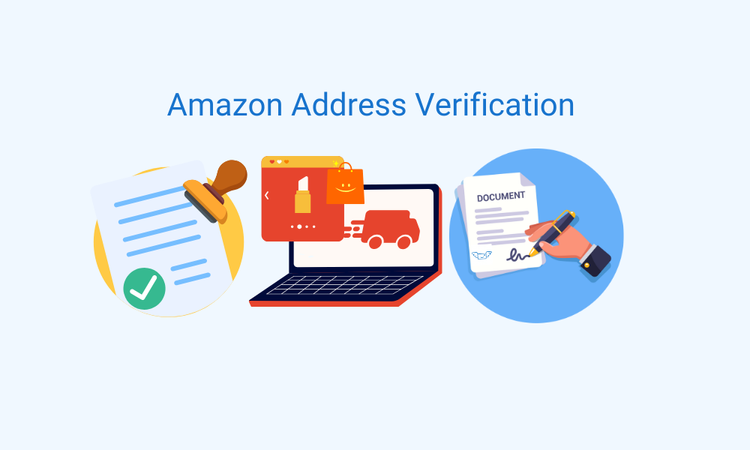
As of May 2025, here’s what Amazon will typically ask sellers for:
- A government-issued photo ID
- Proof of address or business registration documents
- A signed lease agreement accompanied by a utility bill (more on that later)
- A live video call where you show your documents to an Amazon representative
This is process is mandatory for anyone who is looking to join the Amazon Seller platform.
Why is Amazon making verification stricter?
You might be wondering, what changed? Why the sudden crackdown? As it turns out, it’s not so sudden. Amazon’s been slowly tightening its rules for years due to a multitude of reasons.
Here are a few of the bigger ones:
Combating fraud and counterfeits
Amazon has taken a lot of heat over counterfeit products. Fake listings, knockoff goods, and identity fraud have damaged consumer trust across the platform. To ensure a safer, more trustworthy environment, Amazon has opted into a more thorough vetting process.
Stricter verification helps filter out the scams and ensure that only real, legitimate sellers can get through the door.
Regulatory pressure around the world
Governments across the globe (including the U.S., UK, and EU) are pushing marketplaces to follow KYC (Know Your Customer) and AML (Anti-Money Laundering) regulations. That means Amazon has to verify who’s selling to make sure they’re not involved in anything illegal, like tax fraud or selling illicit goods.
What’s actually changed in the verification process?
If you heard from someone a few years ago that Amazon verification was “easy,” that was probably true back then. But now? Not so much.
Here's what’s different:
Stricter address requirements
Amazon now requires verifiable proof of a physical address before you can start selling on their platform. They are essentially looking for proof that your business has a legitimate, exclusive, and veritable location.
You may be tempted to seek an address solution that is “more affordable”, like a PO box, virtual mailbox, or coworking space. Unfortunately, those won’t get you very far in the eyes of Amazon. PO boxes are automatically disqualified because, as you may have guessed, they are not true physical locations. Addresses tied to virtual mailbox services are typically rejected because they are non-exclusive (i.e. they are shared by many people) and not tied to a real business location. Co-working spaces are hit or miss, but are often turned down on the basis that they aren’t always tied to a specific, individual lease.
What constitutes proof of address?
A signed lease agreement in your business’ name, as well as a recent utility bill, can confirm that that address is actively in use by you.
If you don’t have a traditional lease or utility bill in your business name (and if you’re a digital nomad, it’s totally understandable that you may not), TruLease can provide a physical business address with a lease agreement and utility bill included.
TruLease — physical address with lease agreement and utility bill
Amazon, banks, and other organizations often require proof of a business’s physical address in the form of a signed lease agreement and a utility bill. TruLease provides access to an actual office space along with the documentation needed to demonstrate rights to that space and its active use.
What’s Included with TruLease
Dedicated office address
Each TruLease plan provides a unique office suite located in a commercial building through VPM’s partner network. These addresses are not registered agent offices, virtual mailboxes (CMRAs), coworking centers, or virtual office providers.
Lease agreement in your business’s name
When renting an office through TruLease, you’ll sign a one-year lease agreement showing your business’s legal right to use the space.
Utility bill service options
TruLease offers two utility bill formats to provide additional documentation of the office location:
-
Lessor’s utility bill (Included) – Issued in the landlord’s name and showing active utility service at the leased property. Delivered within approximately one business day.
-
Custom utility bill (Add-On) – Landline or internet service can be arranged under your business’s name. TruLease assists with the order and installation process. You’ll handle all service payments and cancellations directly with the provider. Setup generally takes one to two weeks.
On-site confirmation
Property owners or managers are available to verify the leased space’s existence and occupancy if an organization requires confirmation through a phone call, inspection, or documentation.
Mailbox and mail management
All TruLease plans include a mailbox at a VPM commercial office location, with online access to scan, view, and forward mail and packages.
Mandatory video verification
All new sellers are required to hop on a live video call where you show your ID and other documents to prove you are who you say you are. You have the option to either jump on a call in real-time, or schedule one for a later date.
Pro-tip: Have your documents handy, be in a quiet place with good lighting, and make sure everything is easy to read.
Re-verification is now a real possibility
If you thought you were out of the water once your account gained approval, you might want to think again. Even after you’re approved, Amazon can (and often will) circle back to ask for updated documents or to confirm details again to ensure the integrity of the platform. This is why it’s a good idea to maintain a verified U.S. physical address for as long as you plan to sell on the platform.
What this means for new sellers
To avoid the inevitable stress that comes with rejection, you’ll want to make sure you get everything right the first time.
Here are a few things to remember when diving into the verification process:
You’ll need more documents up front
To reiterate, here is what you’ll need to provide in order to start selling on Amazon Marketplace:
- Government-issued ID that matches your account
- Business registration docs (if registering as a business)
- A recent utility bill and signed lease agreement with your name and address (Amazon won’t accept PO boxes or virtual mailboxes, so this needs to be a physical address)
Pro tip: If you need help getting those documents, TruLease can provide a verifiable business address, signed lease, and utility bill that is proven to work for Amazon verification.
Expect longer setup times
Getting verified used to take a few days. Now? It’s not unusual for it to take 1–3 weeks. If there’s an issue, it can take even longer, so be sure to build that into your launch timeline.
There’s a higher risk of rejection
Because Amazon’s system is mostly automated, small mistakes can get your application flagged or rejected. And since Amazon doesn’t offer detailed, personalized support during this stage, troubleshooting can be difficult without guidance.
Pro tip: Double check your application before deciding to proceed. Your name, business name, and address should match exactly across all documents.
Your next steps
Amazon’s stricter verification process might feel like an uphill battle, especially when you’re just trying to get your business off the ground. But the truth is, this new level of scrutiny helps keep the platform safer by filtering out scams and protecting both buyers and sellers.
If you’re stuck on the address verification piece, or you just want to make sure your documents are solid from the start, services like TruLease can make the process a whole lot smoother. With TruLease, you get a real business address along with a signed lease and utility bill under your business name, which checks all the boxes for Amazon’s requirements. It’s a simple way to avoid frustrating delays, rejections, or guesswork.
If you’re ready to move forward with confidence, don’t let the paperwork hold you back. Get the documentation you need, get verified, and get selling!